
You know the exact feeling. You’ve just spent two hours in the driveway meticulously washing and drying your car. The paint looks like glass. You pack up your buckets, take the car for a quick spin around the block to admire your work, and the moment you hit the brakes at the first stop sign—bam.
A rogue stream of dirty water shoots out of your side mirror housing, leaving a chalky, wet trail straight down your freshly cleaned door.
It’s the ultimate detailer’s headache. The car looks flawless at first glance, but after a short drive or a few minutes sitting in the warm sun, those hidden reservoirs of water decide to ruin the finish. If you are tired of chasing endless water streaks with a towel, you are definitely not alone.

The Anatomy of the Problem: Why Mirrors Hold So Much Water
The issue comes down to the architecture of modern vehicles. Today's side mirrors aren't just solid blocks of plastic; they are complex, hollow assemblies packed with motors, heating elements, cameras, and folding joints.
This design creates a labyrinth of internal gaps and weather stripping. During the wash and rinse phase, water floods these hidden cavities. When you dry the car, you are only wiping the outer shell. The moment the car vibrates, shifts weight, or the plastic warms up in the sunlight, those ounces of trapped water slowly bleed out through the bottom seams.
Why Your Trusty Microfiber Can’t Fix It
We all love a plush drying towel for sweeping across a large, flat hood. The problem is that a towel has a fatal physical limitation: it can only dry what it actually touches.
Jamming the corner of your microfiber into the mirror seam isn't going to extract the water sitting deep behind the glass. No matter how aggressively you wipe the exterior, that hidden moisture will eventually find its way out. And as any experienced car guy knows, once those mineral-heavy drips bake into the paint under the sun, you aren't just dealing with a wet spot—you're dealing with etched paint.
(👉 Related Guide: How to Prevent Water Spots After Washing Your Car)
The Detailer’s Secret: High-Speed Airflow
This exact frustration is why the detailing community has aggressively shifted toward forced-air drying for complex areas.
Instead of waiting for gravity to push the water out, high-speed airflow allows you to proactively evacuate the mirror housing. By blasting concentrated air directly into the glass gaps and folding joints, you force the hidden water out instantly. It completely eliminates the guesswork and stops the post-wash drip before it ever happens.
(👉 Deep Dive: Turbo Fan vs. Towel: Which Actually Dries a Car Better?)
A Simple Garage Routine to Stop the Drips
You don’t need an elaborate setup to solve this. Tweaking your workflow with a few targeted steps makes a massive difference:
1. Attack the Mirrors First Don't save the mirrors for last. Immediately after your final rinse, focus your attention on purging the intricate areas. The sooner you evacuate the trapped water, the less chance it has to leak down your doors later.
2. Blast the Seams and Joints Focus your airflow around the edges of the mirror glass, the pivot joint where the mirror folds, and the bottom weep holes. You will be surprised by how much water sprays out from these tight spaces.
3. The "Fold and Flush" Technique If your car has power-folding mirrors, cycle them in and out while drying. Changing the angle of the housing opens up pinched weather stripping and releases hidden pockets of water that would otherwise stay trapped.
4. Minimize Dwell Time The longer water sits in those housings, the higher the risk of hard water streaks. Getting the water out quickly is the best way to maintain a flawless, scratch-free finish.
(👉 Read more: The Best Way to Dry a Car Without Scratching the Paint)
The Right Tool for the Job
When dealing with panel gaps and mirror housings, you need targeted velocity, not a bulky yard blower that is difficult to maneuver around your clear coat.
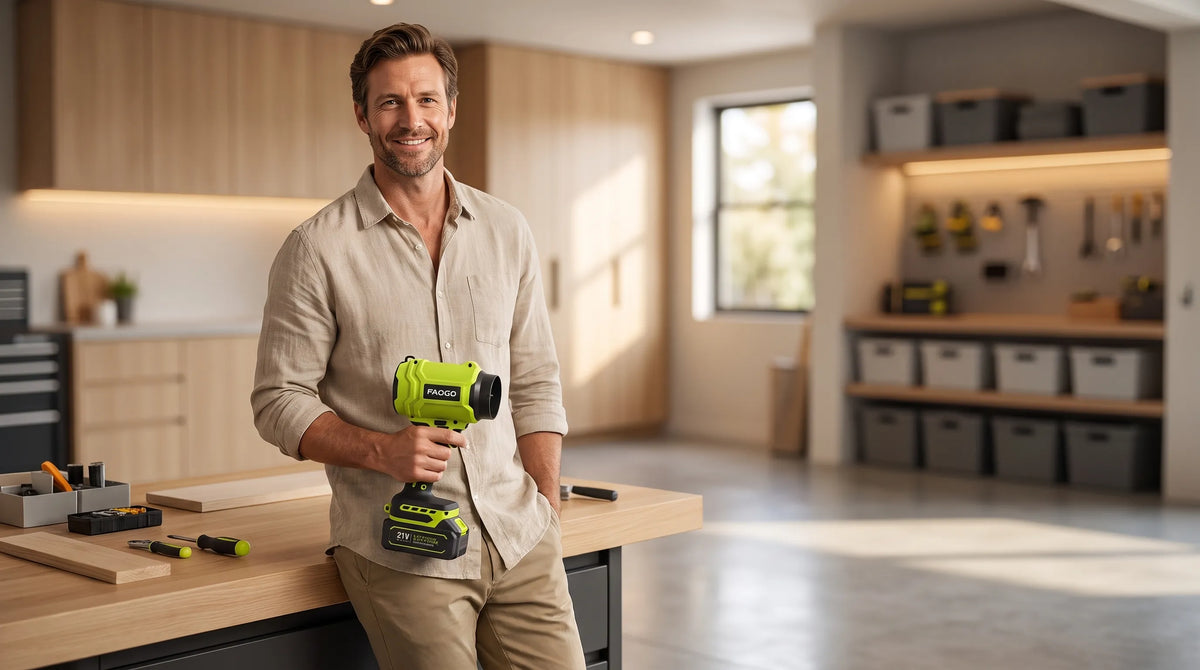
If you are serious about refining your wash routine and stopping water streaks for good, the FAOGO Turbo Fan is built for this exact garage scenario. Engineered as a compact, cordless powerhouse, it delivers the precise, high-velocity airflow needed to blast water out of mirror joints, grilles, and intricate wheels—eliminating the dreaded post-wash drip without tethering you to a wall outlet.

FAQ
Why do my mirrors still drip even after I dried the whole car? Because the water isn't on the surface. It is trapped deep inside the plastic housing and mechanical folding joints. As the car moves or sits in the sun, gravity and heat cause that internal water to slowly leak out.
Will those mirror drips actually damage my paint? Yes, they can. As the water slowly runs down your door and evaporates in the sun, it leaves behind concentrated mineral deposits. Over time, these hard water spots will etch directly into the clear coat.
Is forced air really that much better than a towel for side mirrors? Without a doubt. A towel simply cannot reach the internal cavities of a mirror assembly. Airflow mechanically forces the water out of the tight gaps, ensuring the housing is completely dry from the inside out.
Share:
How to Prevent Water Spots After Washing Your Car
Why I Finally Ditched Towels for Full Car Drying