
Quick answer: A cordless turbo fan like the FAOGO 980k RPM blower isn't just for drying cars. It replaces canned air, leaf rakes, towel-drying routines, and half the cleaning supplies in your garage. Here are 12 ways people are actually using it, with practical tips for each.
I bought a cordless turbo fan because I needed something to dry my car without scratching the paint. That was the plan. One job, one tool, done.
Six months later, it's the most-used tool in my garage. Not because I'm drying my car every day, but because the thing moves so much air so fast that I keep finding new things to point it at. BBQ grills, dog fur, gutters, my nephew's air mattress, snow on the walkway. The list grew on its own.
If you already own one, you probably found half of these yourself. If you're thinking about buying one, here's what it can actually do, beyond what the product page tells you.
The 12 uses
1 Touchless car drying
This is the obvious one, so I'll keep it short. After a wash, water sits on the paint in sheets and beads. If you wipe it off with a towel, whatever dust or grit is on the surface gets dragged across your clear coat. That's where swirl marks come from, not the washing.
A 980,000 RPM motor pushing 50+ m/s (110+ mph) air through a narrow nozzle blows the water right off. No contact, no scratches. Start at the roof, work down at a 45-degree angle, and the whole car is dry in about four minutes. Use the lowest speed setting that still moves the water, it's quieter and the battery lasts longer.
Tip: Blow water out of the side mirrors and door handles first. These are the spots that drip for hours after you think the car is dry. Get them early, save yourself the streaks.
2 Blowing leaves (way faster than raking)
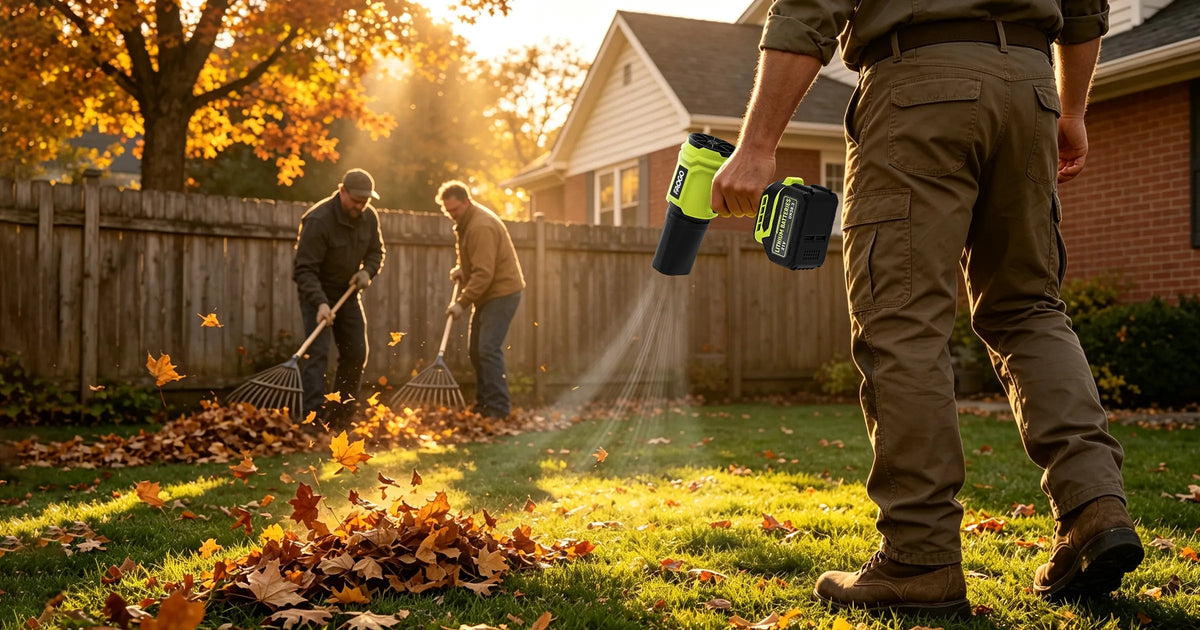
The product page says it's 3x faster than raking. That's not marketing, it's math. A rake covers maybe a 2-foot strip per pass. The fan moves air across a 3-4 foot wide area in one sweep, and the air penetrates under wet leaves that a rake just drags over.
On a dry fall day with light leaves, I can clear my 600 sq ft front yard in under two minutes. Wet leaves stuck to the driveway take longer, but still faster than a rake. Run it on the highest speed for this one, you need the velocity.
Tip: Blow leaves onto a tarp, then drag the tarp to wherever you dispose of them. Trying to blow leaves all the way to the curb wastes battery and scatters them back over your lawn.
3 Clearing patio, deck, and driveway
Same principle as leaves, but for everything: grass clippings, dirt, pollen, the sand the kids tracked in, the sawdust from your weekend project. After mowing, I hit the driveway and patio with the fan for about 30 seconds and it looks like I swept for an hour.
This is where the cordless design matters most. You're not dragging an extension cord across the yard or fighting a gas blower that won't start. Pick it up, hit the patio, put it down. Two batteries means you always have one charged.
4 Garage and workshop cleanup
Sawdust, drywall dust, metal shavings, the pile of stuff on your workbench that's been there for three months. The fan pushes it all off the bench and out the garage door in one pass.
For PC builders and DIYers: this replaces your shop vac for light dust work. It won't handle wet messes or heavy debris, but for dry dust and shavings, it's faster and you don't have to empty a canister. Just don't use it near anything you don't want blown around, like important papers or small hardware.
Tip: Open the garage door before you start. Otherwise you're just moving dust from one surface to another inside a closed space. Ask me how I know.
5 BBQ grill ash and grease
This one surprised me. After grilling, there's always a layer of ash and grease residue in the firebox. Scraping it takes effort and a wire brush. Hitting it with the turbo fan while it's still warm blows the loose ash right out.
Obviously, don't do this with lit coals or active flames. Wait until the grill is cool enough to touch, then blow the ash into a pile and scoop it out. Grease that's stuck on still needs a brush, but the loose stuff is gone in seconds.
6 Light snow removal
For a dusting of dry snow (under 2 inches), the turbo fan works on walkways, car windshields, and mailboxes. It's not going to move a 10-inch drift, and wet snow just laughs at it. But for that annoying layer of light snow you'd normally brush off by hand with freezing fingers, the fan clears it in one pass.
I use it specifically for the car when there's frost or light snow. Saves scraping the windshield and gets into the mirror housings and wiper blade gaps where an ice scraper can't reach.
7 Drying a wet dog (or cat, if yours tolerates it)
After a bath or a rainy walk, dogs shake off most of the water themselves. But the undercoat stays damp for hours, and wet-dog smell lingers. Running the fan on a lower speed setting from a few feet away helps get the undercoat dry.
My labrador doesn't love the sound at first, but on low speed from 4-5 feet away, it's basically a loud blow dryer. Some dogs will sit still for it, some won't. Start far away and let them get used to the airflow before moving closer. Never point it directly at their face or ears.
Tip: Use the lowest speed. High-speed air on wet fur can mat it and is way too loud up close. The goal is gentle, continuous airflow, not blast force.
8 Dusting PC, keyboard, and electronics
Canned air costs $8-12 a can, runs out after 3-4 uses, and sprays freezing chemical propellant that can crack cold plastic components. The turbo fan blows room-temperature air continuously for 13+ minutes per battery. One fan replaces dozens of cans over its lifetime.
For PC internals, hold the fan about 18 inches away and use short bursts. Don't spin the fans in your PC case too fast, that can generate voltage feedback and damage the motherboard. Hold the fans still with a finger while you blow air over them. For keyboards, a two-second blast from close range clears every crumb and dust bunny.
Cost comparison: If you buy 2 cans of compressed air per month at $10 each, that's $240/year. The FAOGO fan is $99.99 once. You break even in 5 months.
9 Clearing gutters and roof debris
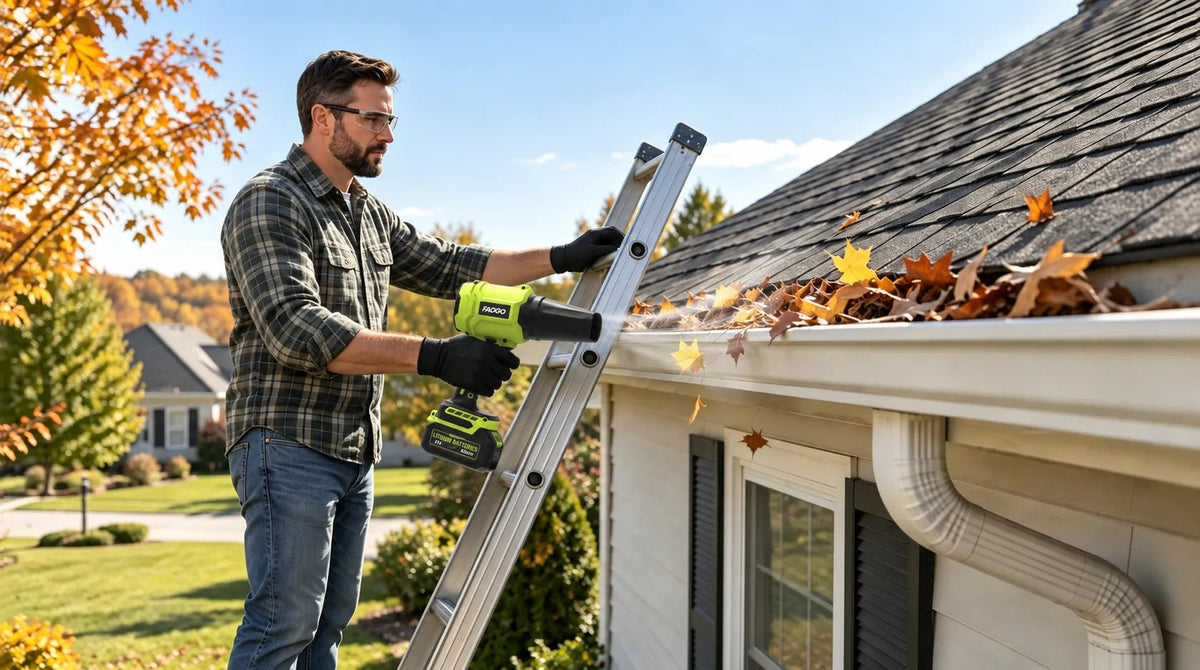
This is the one that saves you from climbing a ladder as often. Standing on the ground (or a low step ladder), you can blow leaves and pine needles out of gutter channels along a single-story roofline. It won't reach second-story gutters, and it can't clear clogs that are already packed solid. But for loose debris in accessible gutters, it works.
The narrow nozzle is useful here, it lets you direct the air into the gutter channel without spreading debris everywhere. Same goes for blowing debris off a flat roof or awning.
10 Inflating mattresses, pool toys, and inflatables
The nozzle fits loosely over most inflation valves. It's not a dedicated pump, so it takes some hand pressure to hold it in place. But for an air mattress at 1 AM when you don't have a pump, or a pool float before a beach trip, it works and it's fast.
It won't reach the high pressure needed for bicycle or car tires. It's a volume mover, not a pressure tool. For low-pressure inflatables only.
11 Drying gym shoes and workout gear
Sweaty gym shoes shoved in a gym bag for a few hours smell terrible by the time you get home. Same with damp workout clothes, swimsuits, and towels. Pointing the fan into each shoe for 30 seconds on low speed dries them out before they go into the closet.
For the whole gym bag, leave it open and run the fan across the opening for a minute. The air circulation kills the damp smell. I keep the fan in my garage near where I drop my bag, so it's a 60-second habit, not a chore.
12 Drying wet outdoor gear after rain or camping
Tents, sleeping bags, hiking boots, backpacks, tarps. Anything fabric that got wet and needs to be dry before storage. Storing damp gear in a closet leads to mold, mildew, and that smell that never comes out.
The fan accelerates drying significantly compared to air-drying. A damp tent that would take 4-6 hours to air dry can be ready to pack in under an hour with continuous airflow. The 980k RPM motor moves enough air to penetrate fabric layers and evaporate trapped moisture.
What it won't do (be honest)
A cordless turbo fan is not a magic wand. Here's where it falls short:
Wet messes: It moves air, not liquid. A puddle on the garage floor won't blow away. A wet-vac or mop is still the right tool for standing water.
Heavy debris: Rocks, sticks, and thick mud won't budge. The fan is designed for dry, lightweight material.
High-pressure jobs: Tire inflation, pressure-washing, sandblasting. Wrong tool entirely.
Quiet environments: At 980k RPM on high speed, it's loud. Not gas-blower loud, but you won't use it during a baby's nap time. Indoor use means everyone knows you're using it.
Long continuous jobs: 13 minutes per battery on high speed is plenty for most tasks, but if you need 45 minutes of continuous blowing (like a big yard cleanup), you'll want to swap batteries or take a break.
Things to know before you buy
If you're looking at the FAOGO cordless turbo fan for any of the uses above, here's what matters:
| Spec | Why it matters |
|---|---|
| 980,000 RPM motor | This is the difference between "moves some air" and "blows water off a car at 45 degrees." Lower RPM fans can't do touchless drying. |
| Dual 21V 4.0Ah batteries | Two batteries = 26 minutes total runtime on high. You'll never run out mid-job for normal use. The BMS system prevents overcharging. |
| 2.8 lbs (1.27 kg) | Light enough to use one-handed. You'll hold it above your head to reach gutters without straining. Gas blowers are 2x heavier. |
| Multi-speed settings | Low speed for electronics and pet drying. High speed for leaves and car drying. One tool, multiple jobs. |
| Narrow precision nozzle | Focuses the airflow for targeted jobs (keyboard cleaning, gutter clearing). Remove it for wider-area blowing. |
| ABS composite shell | Survived being dropped from counter height twice. Gas blower plastic cracks. This one flexes. |
FAQ
Can I use a cordless turbo fan indoors?
Yes, but it's loud and it blows dust everywhere. For PC cleaning, take the computer outside or to the garage first. Using it indoors for drying shoes or gym gear is fine, just expect the noise.
Is it safe to blow air directly on car paint?
Yes. The air is clean, filtered through the intake, and the nozzle doesn't touch the surface. The risk with towel drying is the grit getting trapped between the towel and the paint. Air drying eliminates that contact entirely.
How long does a full charge take?
The FAOGO uses a Smart Safety Charger with indicator light. Red means charging, green means full. A full charge on a depleted battery takes roughly 2 hours. Since you get two batteries, you can charge one while using the other.
Will it damage electronics components?
Used from 18+ inches away with short bursts, no. The air is room temperature, so there's no freezing risk like canned air. The one thing to watch is fan spin, hold PC case fans still with your finger so they don't generate voltage from being spun too fast.
Can it replace a gas leaf blower for yard work?
For a typical suburban yard, yes. For large properties (half acre+ of heavy leaf coverage), a gas blower still has the edge in runtime and raw power. But for patios, decks, driveways, and light leaf duty, the cordless fan handles it fine.
Is it worth it if I only need it for one thing?
Depends on what that one thing is. If it's car drying and you wash your car weekly, yes, it pays for itself in towel replacements and paint protection. If you're buying it for just inflating a pool toy once a year, get a $5 hand pump instead. The value comes from using it for multiple jobs.
How does it compare to cheaper cordless blowers?
Cheaper blowers (the $30-50 range) typically run at 15,000-25,000 RPM, which is fine for leaves but can't effectively dry a car or clean electronics. The 980k RPM motor is what makes touchless car drying and PC dusting possible. Lower RPM fans just don't generate enough air velocity for those jobs.
One tool. Twelve jobs. Zero cords.
FAOGO 980k RPM Cordless Turbo Fan. Dual 21V batteries, 26 min runtime, 2.8 lbs, multi-speed control. Car drying, leaf blowing, PC cleaning, pet drying, and 8 more things you haven't tried yet. $99.99.
See it on FAOGO →Free shipping over $90 · 90-day free returns · Ships in 1-2 business days

Share:
One cordless turbo fan replaced three things in my dorm room
Fall yard cleanup: how I cut my leaf clearing time by two-thirds